
blog categories
recent posts
blog tags


Electricity is the "lifeblood" of modern society. From the lighting of household lamps to the roar of factory machines, from the stability of urban power grids to the efficiency of industrial systems,...

In an era of accelerating iterations in electronic devices, the stability and adaptability of core components directly determine the performance ceiling of equipment. With over 10 years of technical a...

When it comes to transformers, what comes to mind? Is it the gray iron box humming in the corner of the community, or the small and delicate coil components in electronic devices? In fact, transformer...

In the design of transformers, inductors and other electromagnetic components, there is a seemingly tiny but far-reaching detail - the “magnetic core air gap”. This small gap (usually in millimeters o...

In the highly competitive electronic equipment market, a product with outstanding performance can often help you stand out. The quality of core magnetic components is crucial to the performance of the...

In the family of electronic components, although inductors and transformers both belong to magnetoelectric conversion components, their structural compositions have significant differences due to diff...

In daily life, transformers are indispensable electronic components. They are like invisible power regulators, providing suitable voltage and signal conversion for various devices, ensuring the orderl...

1. Rod Inductors: "Assistants" in Signal Transmission and Filtering Rod inductors take a ferrite rod as the core, with wires wound around it. The high magnetic permeability of ferrite can enhance the ...

In the composition of a transformer, the bobbin (framework) is rarely mentioned as frequently as the coil or magnetic core, yet it is a key component ensuring the stable operation of transformers. It ...

In the modern power electronics field, transformers are key devices for voltage conversion, electrical energy transmission, and distribution. Their performance directly affects the stable operation of...

1.EF Type Bobbin (1) Structural Features: The EF type Bobbin is shaped like a combination of the letters "E" and "F", typically featuring three or more pins, which are distributed on one or both sides...

ER-Type Bobbin:Structure, Application Scenarios and Performance Advantages 1. Structural Features The magnetic core of the ER-type Bobbin is E-shaped, but its appearance is different from that of EF-t...

EE-Type Bobbin 1. Structural Features The ferrite magnetic core of an EE-Type Bobbin is shaped like two symmetrical "E" letters combined, with the width of the central leg usually equal to t...
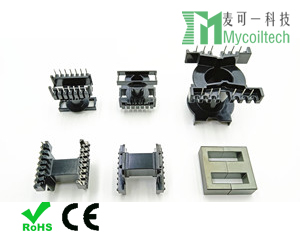
Ferrite cores are the core components of electronic transformers, and their material selection directly determines the efficiency, volume, and stability of the equipment. As mainstream materials in th...
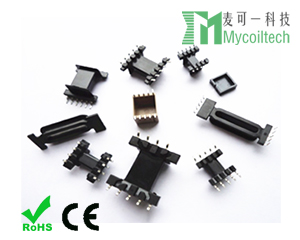
As we all know, when converting electrical energy, we always rely on devices like transformers and adapters. But how are these components actually made? Let's break it down. The transformer bobbi...
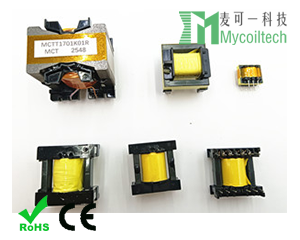
Electronic transformers are core components of power supply, electronic, and communication equipment. Based on the principle of electromagnetic induction, they transmit electrical energy between circu...
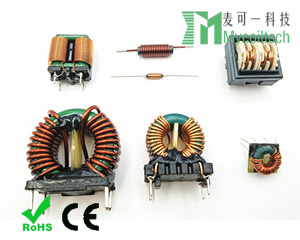
In today's era of rapid technological advancement, efficiency and reliability have become core requirements for electronic devices. Whether it's cutting edge electronics, power supplies, or communicat...
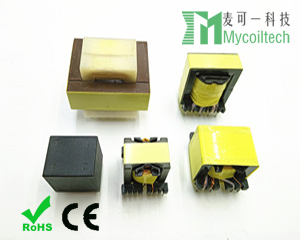
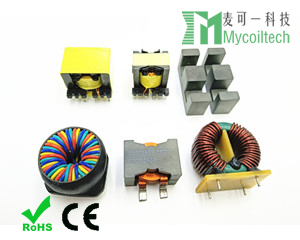
In power supply circuits, transformers and inductors look similar and are often confused. However, they differ significantly in function, structure, and application. Understanding their differences he...
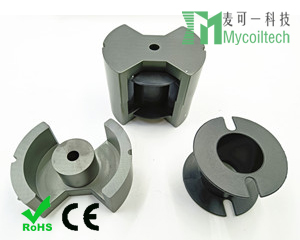
In high-power drive scenarios, the combination of the PM87 Power supply drive transformer bobbin and high-permeability ferrite core is the core key to ensuring stable and efficient operation of equipm...
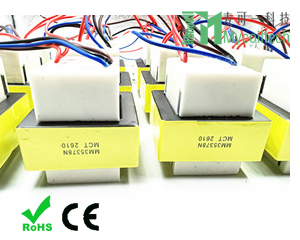
As a high-power representative in the EE series, the high power EE65 encapsulated transformer has become a core power supply component for medium and high-power electronic equipment, thanks to its adv...
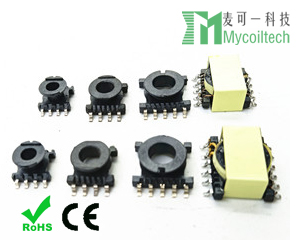
Preferred components for high-frequency power supplies requiring compact size and high isolation The ER7.5 high-frequency electronic transformer features an SMD design, integrating the advantages of c...
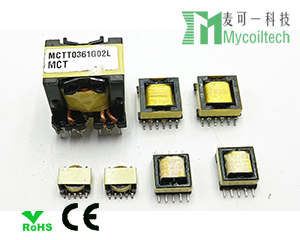
Electronic transformers act as the core energy control component, mainly for voltage conversion, electrical isolation and power transmission. They are widely applied from portable digital products to ...
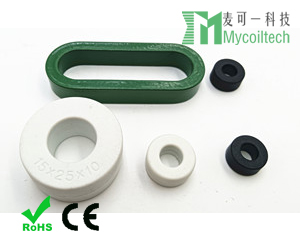
High-frequency inverter power supplies operate at a frequency range of 20 kHz to 50 kHz. The main transformer serves as the core component of a power supply. Although ferrite, the traditional magnetic...
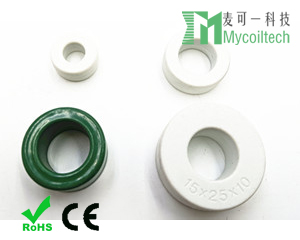
In the application of nanocrystalline toroidal cores (ultra-microcrystalline iron cores) in inverter power supplies, certain problems including noise, brittleness and inconsistent performance once eme...
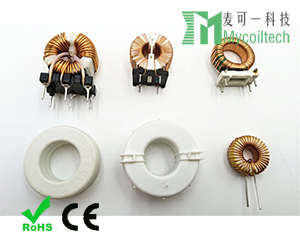
Almost all nanocrystalline transformers are wound by complete machine manufacturers themselves. Different companies have different inverter circuit designs, different understandings of nanocrystalline...
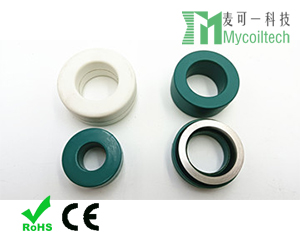
Amorphous and nanocrystalline soft magnetic materials feature outstanding properties. They offset the drawbacks of silicon steel and ferrite materials in various applications, upgrade all types of ele...
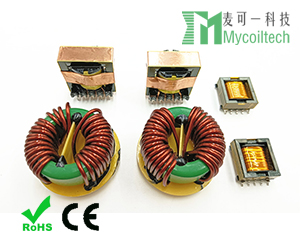
In the research, production and mass manufacturing of switching power supplies, industrial control equipment and digital adapters, standard general electronic components can no longer meet the needs o...
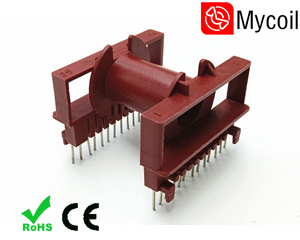
The ETD29 transformer horizontal bobbin fits ETD29‑16‑10 ferrite core. It is made of red PA66 nylon with glass‑fiber. Pin pitch is 2.54 mm, square pin size 0.6×0.6 mm. It supports direct PCB soldering...
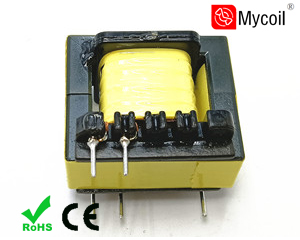
The EE30 vertical flyback transformer is a core supporting component for small-to-medium power high-frequency power supplies. With its mature structural design and stable performance, it is widely use...

Hefei Mycoil Technology Co.,LTD(MCT) is a high-tech and growing enterprises, we are committed to the development and production of various types of coil products, various types of filter products. Meet the needs of customers with various required for...

please read on, stay posted, subscribe, and we welcome you to tell us what you think.


2026 Hefei Mycoil Technology Co.,Ltd..All rights reserved

皖公网安备 34019002600405号
 +86(0)55166196829
 sales@mycoiltech.com
 Lily~Mycoiltech